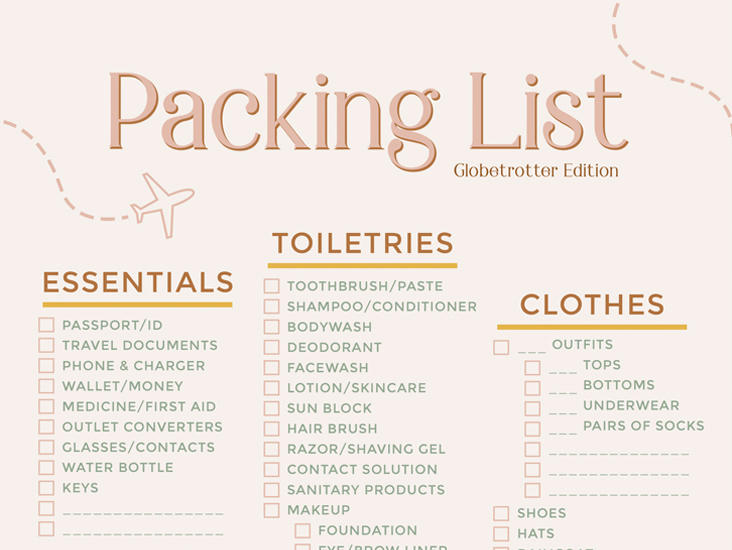
It's currently a difficult time for traveling, but that doesn't mean we can't make it into an opportunity! I've been using this time to continue brainstorming for future travel and how to improve the experience. I noticed it can be pretty annoying to write out a packing list every time so I made these Ultimate Packing Lists. You can print them out or check them off right on your phone/computer as you pack. I even made extra slots for you to customize it into your own list! These lists will make sure you're relaxing on your trip instead of shopping for everything you forgot.

For those who like traveling off the beaten path, or maybe you've just already seen the major stops and want somewhere new. Either way, I've gathered some amazing spots to see in Germany that you may have yet to hear of. I'll start closest to one of Europe's major airport hubs, Frankfurt, and work around.

I wanted to write this post about the small city we live in because, albeit not the usual expat destination in Germany, Jena does get its fair share of international residents. So to those who may be planning to move to Jena and would like to know what the town is like, I hope this is insightful.
When we first asked about the city, we were told things like "Jena is a nice small town with lots of people." "25% of the population is students so there is a lot happening." "It's very international." "There are plenty of English speakers so you don't have to worry." I would say all of those statements are more complimentary than accurate. We felt very differently when we moved here.

When we first asked about the city, we were told things like "Jena is a nice small town with lots of people." "25% of the population is students so there is a lot happening." "It's very international." "There are plenty of English speakers so you don't have to worry." I would say all of those statements are more complimentary than accurate. We felt very differently when we moved here.

As an Asian-American traveler, something I've been frequently asked is, "Is traveling to an Asian country and dressing in their traditional clothing also cultural appropriation or ethically wrong?" Generally, I think there is a difference between traveling to a country, learning about their culture, and trying on their traditional clothing in a respectful manner VS wearing it elsewhere as a "fun, exotic costume" or defacing it by creating "sexualized versions."
BUT there are other aspects you should consider from country to country like colonization history, the impact of western imperialist violence,and the cultural meaning behind the clothing. True appreciation entails some level of understanding and respect. If you have the ability to travel to another country and try on the local clothing, you have access to google. It's so easy to do a simple search on the clothing or the impact of western imperialism in a country. If you can't dedicate such a small amount of time towards educating yourself on something you'd like to be involved in, are you truly respecting the culture?
>> Rent/purchase from local businesses
>> Wear the clothing properly! Something as simple as draping one side over the other can be significant.

>> Wearing a "sexualized" qipao/kimono/any other traditional clothing ANYWHERE - fetishizing and hypersexualizing Asian women/culture is already a gross, rampant issue; let's not perpetuate and participate in it
>> Wearing traditional clothing for parties, Halloween, raves, etc - our culture is not a toy; especially not something for someone to mock with cheap knockoffs, racist poses, and fake, inaccurate accessories
>> Dressing up as a geisha - Westerners glorifying geisha culture when many geishas were forced into prostitution due to Western occupation is weird

And PLEASE don't wear it back at home! POC immigrants around the world are mocked for how we dress, talk, eat, etc and often criticized for not "assimilating." But when a non-POC tries foreign clothing on, they're praised for being trendy, unique, and "cultured." You can see how insulting it may be to the immigrants who have to witness the double standard.
Well I hope this perspective from an Asian-American has enlightened some travelers! Never hesitate to ask me a question.
BUT there are other aspects you should consider from country to country like colonization history, the impact of western imperialist violence,and the cultural meaning behind the clothing. True appreciation entails some level of understanding and respect. If you have the ability to travel to another country and try on the local clothing, you have access to google. It's so easy to do a simple search on the clothing or the impact of western imperialism in a country. If you can't dedicate such a small amount of time towards educating yourself on something you'd like to be involved in, are you truly respecting the culture?
Some things to make sure:
>> Do your research. Will the locals have an issue with you wearing their traditional clothing? Does the item have religious significance?>> Rent/purchase from local businesses
>> Wear the clothing properly! Something as simple as draping one side over the other can be significant.
Example of something that is OK:
>> Traveling to Korea, learning about our traditional wear, renting a real hanbok from a local Korean business, and taking photos IN Korea WITHOUT racist posing (no 'slant eyes,' no weird praying pose, no chopsticks in hair, etc)
Examples that are NOT ok:
>> Wearing a hanbok and calling it a kimono - Asia is the biggest continent and made up of 48 different countries; it is ridiculous to lump us all in together and assume all Asian countries the same>> Wearing a "sexualized" qipao/kimono/any other traditional clothing ANYWHERE - fetishizing and hypersexualizing Asian women/culture is already a gross, rampant issue; let's not perpetuate and participate in it
>> Wearing traditional clothing for parties, Halloween, raves, etc - our culture is not a toy; especially not something for someone to mock with cheap knockoffs, racist poses, and fake, inaccurate accessories
>> Dressing up as a geisha - Westerners glorifying geisha culture when many geishas were forced into prostitution due to Western occupation is weird

And PLEASE don't wear it back at home! POC immigrants around the world are mocked for how we dress, talk, eat, etc and often criticized for not "assimilating." But when a non-POC tries foreign clothing on, they're praised for being trendy, unique, and "cultured." You can see how insulting it may be to the immigrants who have to witness the double standard.
Well I hope this perspective from an Asian-American has enlightened some travelers! Never hesitate to ask me a question.
If you found this useful, please head over to Instagram and follow us to stay up to date with our adventures. And if you have any questions, ask them in the comments below!
Thanks to the wonders of Google Translate, it's no longer as intimidating to move to another country. So we assumed the groceries would be a breeze for Google Translate after pages of rental agreements, insurance documents, etc, right? W R O N G!
Navigating kitchen staples have actually been harder because some items translate literally instead of to the German equivalent. And there are some things just unique to Germany/Europe overall. So here's everything we've picked up over the year that should make your first time way easier~
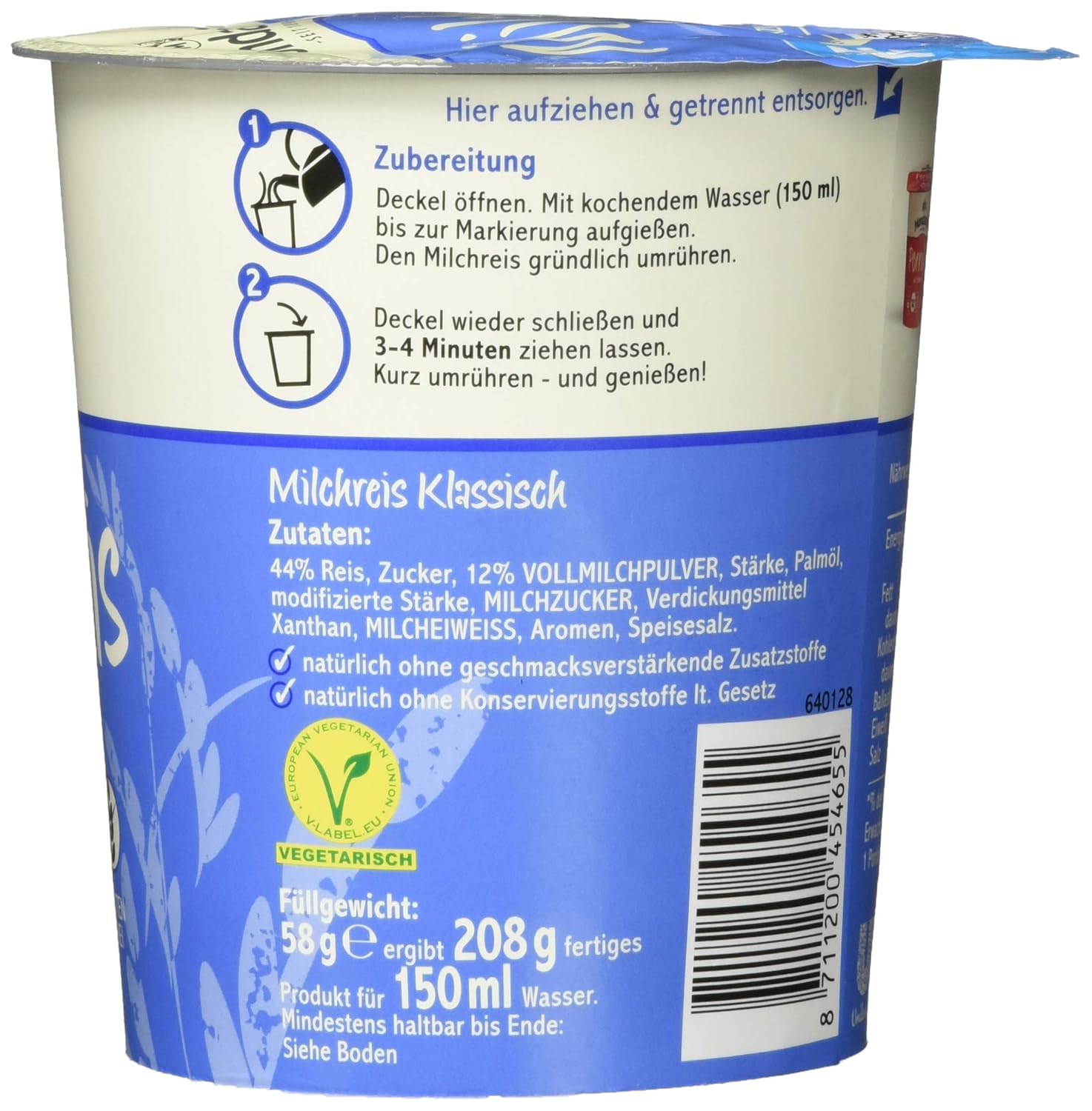
Rohmilch - raw milk; only found on farms
Vorzugsmilch - filtered raw milk that has not been heated or homogenized
Frischmilch - pasteurized milk; closest to milk in America
ESL Milch (Laenger-Frisch Milch) - longer-lasting fresh milk; should last about a month refrigerated
H-Milch - long life milk; unopened, can last 6 months at room temp
Once you've decided which milk you'd prefer, you can narrow it down to the usual level of fat you prefer.
Landmilch - country milk; no fat removed
Vollmilch - whole milk; minimum 3.5% fat
Fettarme milch - lowfat milk
Magermilch - skimmed milk
Emmental - what Americans call 'swiss cheese'
Butterkäse - a mild, semi-soft cheese with a creamy buttery taste
Tilsiter - a mild, semi-hard cheese with many small irregular holes
Körniger Frischkäse - cottage cheese; don't listen to google translate, it's not hüttenkäse
Edelpilzkäse - blue cheese
Frischkäse - cream cheese; you may find the texture slightly different as Germans like it particularly spreadable and gelatinous
Type 405 – all-purpose white flour
Type 550 – baking flour
Type 812 – bread flour
Type 1015 – bread flour, darker bread
Type 1050 – white, whole wheat
Type 1600 – bread flour, whole grain
0 Ökologische = Organic
1 Freilandhaltung = Free Range (not organic)
2 Bodenhaltung = Chickens raised on the ground (not organic)
3 Käfighaltung = Chickens raised in a cage (not organic)
The next two letters refer to the country of origin. They are the standard two letter country codes. Some examples below:
AT Austria
DE Deutschland (Germany)
ES Spain
FR France
The last number is supposed to be the expiration date. However, it seems hard to decipher at times.


Navigating kitchen staples have actually been harder because some items translate literally instead of to the German equivalent. And there are some things just unique to Germany/Europe overall. So here's everything we've picked up over the year that should make your first time way easier~
Allergens
Allergies/Food restrictions have actually been amazingly easy to navigate in Germany. All common allergens are required to be bolded on food labels and the spectrum for common allergens is larger than in the US for more reassurance. So if you have some dietary restrictions, you no longer have to spend all day nit picking every food label~ It has been a godsend with my husband's Celiacs.Dairy
Milk
Milk might be an overwhelming item for your first grocery trip 😂 In the US, it's usually just different levels of fat and then brands. But in Germany, there are also several levels of pasteurization to provide you with an overwhelming amount of options.Rohmilch - raw milk; only found on farms
Vorzugsmilch - filtered raw milk that has not been heated or homogenized
Frischmilch - pasteurized milk; closest to milk in America
ESL Milch (Laenger-Frisch Milch) - longer-lasting fresh milk; should last about a month refrigerated
H-Milch - long life milk; unopened, can last 6 months at room temp
Once you've decided which milk you'd prefer, you can narrow it down to the usual level of fat you prefer.
Landmilch - country milk; no fat removed
Vollmilch - whole milk; minimum 3.5% fat
Fettarme milch - lowfat milk
Magermilch - skimmed milk
Condensed Milk
This one will trick you! Germany has something called 'Kondensmilch' which is actually unsweetened evaporated milk and not the traditional sweetened condensed milk you think of in the US. To get the right thing, look nearby for 'Nestlé Milchmädchen' or a Russian/Turkish can label that translates into condensed milk.Sour Cream
Another tricky item that Google will translate to Saure Sahne, but what you're actually looking for is Schmand. In the US, sour cream contains at least 18% fat so you'll want to select the Schmand accordingly. I've found Saure Sahne to be closer to Mexican crema.Cheese
Quark - a very popular dairy product in Germany; the texture/taste is if cream cheese and sour cream had a babyEmmental - what Americans call 'swiss cheese'
Butterkäse - a mild, semi-soft cheese with a creamy buttery taste
Tilsiter - a mild, semi-hard cheese with many small irregular holes
Körniger Frischkäse - cottage cheese; don't listen to google translate, it's not hüttenkäse
Edelpilzkäse - blue cheese
Frischkäse - cream cheese; you may find the texture slightly different as Germans like it particularly spreadable and gelatinous
Baking
Brown Sugar
German brown sugar is closer to sugar in the raw and dry instead of moist like in the US. If this will interfere with your American recipes, you can find some brown sugar or molasses on Amazon.Flour
Flour is numbered in Germany rather than labeled terms such as “all purpose." The lower the number, the more processed the flour is. The higher the number, the more whole grain. Here's a list of the equivalent terms:Type 405 – all-purpose white flour
Type 550 – baking flour
Type 812 – bread flour
Type 1015 – bread flour, darker bread
Type 1050 – white, whole wheat
Type 1600 – bread flour, whole grain
Baking Soda
Google translate will tell you that baking soda is "backsoda." But it's actually called Natron or Speise-Natron (Natrium-Hydrogen-Carbonat)Baking Powder
Baking Powder is called backpulver, but it's not strictly interchangeable with American baking powder. German baking powder is usually single-acting, which means it has a mixture of a heat-activated (slow acting) acid and baking soda while American baking powder is fast double-acting.Eggs
Eggs come in packs of 10 in Germany instead of the dozen. Eggs are also stamped with a code here. The first number determines the quality of the egg:0 Ökologische = Organic
1 Freilandhaltung = Free Range (not organic)
2 Bodenhaltung = Chickens raised on the ground (not organic)
3 Käfighaltung = Chickens raised in a cage (not organic)
The next two letters refer to the country of origin. They are the standard two letter country codes. Some examples below:
AT Austria
DE Deutschland (Germany)
ES Spain
FR France
The last number is supposed to be the expiration date. However, it seems hard to decipher at times.
Meat Cuts
Germany has different meat cuts than America so it may be hard to figure out what you need at times - particularly with beef. Here are some helpful photos and comparisons.
vs

This website (www.fleisch-teilstuecke.at) will also offer all of the cuts in both German and English. You can use the search function to type in 'brisket,' and it will show you what it's called in German.
Everything Else
Tahini
Tahini is simply called Sesam-Paste, but I would highly suggest buying it from your local Oriental shop instead. The German ones I have found have been very burnt and bitter tasting. Not good at all!Pepperoni Pizza
Alas, I have yet to find true American pepperoni here. Salami pizza is NOT the same at all. It's a sad day everytime I crave real pepperoni pizza.
Hope this has been helpful! If you have any questions, never hesitate to ask~
This past holiday, I made sure to check out all of the drinks at the German Christmas Markets - just for y'all 😉🍷 So to my new expats, bookmark this post so you won't struggle to understand what's what when the Christmas Markets come back around!


Glühwein 🍷
probably the most famous of all #ChristmasMarket drinks. It's hot mulled wine, but less sweet than you'd find in America. You can get both red (rot) and white (wieß) #glühwein here in Germany. I find the taste can vary quite a bit from stand to stand and also from city to city
Flavored Glühwein
There are tons of variations of glühwein available so you won't get bored.
Some common ones you'll find are:
⤞ Kirsche - Cherry
⤞ Apfel Zimt - Apple Cinnamon
⤞ Orange Ingwer - Orange Ginger
⤞ Heidelbeere - Huckleberry
⤞ Pflaume - Plum
Feuerzangen Tasse/Bowle 🔥
A traditional form of glühwein where a rum soaked sugar cone is set on fire to drip into the cup (pictured above!) or a large pot of glühwein
Eierpunsch/Eierlikor 🥚
The German eggnog - very different from the American eggnog. I'd say it's a bit thinner and not as rich. It's also made with white wine, not rum. It's a good alternative if you're looking for a creamy drink, or you just don't like wine.
Met 🍯
Just the German word for Mead (alcohol made from honey), but warmed up~
Jager Tee 🍵
Sometimes spelled Jaga Tee, but it's simply hot black tea with rum. Perfect for a non-sweet alternative!
Williams Birne/Christ 🍐
Some of the markets will have this delicious pear brandy warmed up for you, but I haven't seen it in many cities. If you love pear though, you can find a bottle of this at the grocery store, mix some pear juice in, and just warm it up at home. You'll see it right away because there is often a whole pear in the bottle!
Non-alcoholic drinks 🔞
Non-alcoholic drinks you could try are KinderPunsch (hot mulled juice) or Schokolade (hot chocolate). If you also just love hot chocolate, but don't need to stay away from alcohol, all of the stands will happily add in a shot of rum or amaretto for you.
Glühbier 🍺
Something bizarre that I haven't seen but heard of is Glühbier. Hot, spiced BEER exists! 😰 Apparently often served with cherry juice to give it a bright red color. Sounds horrific to me, but I haven't tried it yet so I can't tell you for sure! Would you give glühbier a try?


Hope this comes in handy for some of y'all! Thanks for reading ✌
HI! I'M CHERRY

I'm a Korean-American who moved to Germany without ever having been abroad before! I started this blog then (read more here), but I'm now back in the US. Now based in Wilmington, NC living a sunny beach life. Please feel free to reach out anytime with any questions!
Categories
- Moving to Germany 14
- Travel 8
- Expat Discoveries 5
- Life in Germany 5
- Paperwork 5
- Shopping 5
- Culture 4
- Moving with your dogs 3
- Travel in Germany 3
- Freebies 1
- Italy 1
- Public Transit 1