From Cherry to Kirsche
  • About
  • Services
  • Contact
  • Moving to Germany
    • Bringing Your Dogs
    • The First Steps
    • Insurance & More Paperwork
  • Travel
This past holiday, I made sure to check out all of the drinks at the German Christmas Markets - just for y'all 😉🍷 So to my new expats, bookmark this post so you won't struggle to understand what's what when the Christmas Markets come back around!


Glühwein 🍷

probably the most famous of all #ChristmasMarket drinks. It's hot mulled wine, but less sweet than you'd find in America. You can get both red (rot) and white (wieß) #glühwein here in Germany. I find the taste can vary quite a bit from stand to stand and also from city to city


Flavored Glühwein

There are tons of variations of glühwein available so you won't get bored.
          Some common ones you'll find are:
          ⤞ Kirsche - Cherry
          ⤞ Apfel Zimt - Apple Cinnamon
          ⤞ Orange Ingwer - Orange Ginger
          ⤞ Heidelbeere - Huckleberry
          ⤞ Pflaume - Plum


Feuerzangen Tasse/Bowle 🔥

A traditional form of glühwein where a rum soaked sugar cone is set on fire to drip into the cup (pictured above!) or a large pot of glühwein


Eierpunsch/Eierlikor 🥚

The German eggnog - very different from the American eggnog. I'd say it's a bit thinner and not as rich. It's also made with white wine, not rum. It's a good alternative if you're looking for a creamy drink, or you just don't like wine.


Met 🍯

Just the German word for Mead (alcohol made from honey), but warmed up~


Jager Tee 🍵

Sometimes spelled Jaga Tee, but it's simply hot black tea with rum. Perfect for a non-sweet alternative!


Williams Birne/Christ 🍐

Some of the markets will have this delicious pear brandy warmed up for you, but I haven't seen it in many cities. If you love pear though, you can find a bottle of this at the grocery store, mix some pear juice in, and just warm it up at home. You'll see it right away because there is often a whole pear in the bottle!


Non-alcoholic drinks 🔞

Non-alcoholic drinks you could try are KinderPunsch (hot mulled juice) or Schokolade (hot chocolate). If you also just love hot chocolate, but don't need to stay away from alcohol, all of the stands will happily add in a shot of rum or amaretto for you.


Glühbier 🍺

Something bizarre that I haven't seen but heard of is Glühbier. Hot, spiced BEER exists! 😰 Apparently often served with cherry juice to give it a bright red color. Sounds horrific to me, but I haven't tried it yet so I can't tell you for sure! Would you give glühbier a try?


Hope this comes in handy for some of y'all! Thanks for reading ✌

     When we first arrived in Germany, we were so busy trying to figure out the paperwork and finances that I didn't even think social etiquette may be an issue. You may be thinking, is there really such a cultural difference in Germany? Yes, yes there is. I've come across so many expats who struggle socializing with Germans here, and sadly, I had found myself in the same boat. So what follows is my list of social oddities discovered as an American expat living in small town East Germany.


Cultural differences between an American and a German


1. Making Friends

     Back home in the States, it's totally normal to ask a few questions to get to know somebody - what they do for work, where they live, relationship status, and so on. But that's not the case here in Germany! Apparently these are personal questions and to ask them right away can be seen as invasive or nosy. It’s simply too much information for your first meeting. Germans tend to be more reserved and aren't so "personal" right away.
     So if these questions are too personal, what do you talk about when first meeting a German? Apparently hobbies are a good first topic. Trying to find common activities or interests are your best bet. If it turns out you have nothing in common, prepare for silence! Rather than filling in the gaps with small talk, many Germans are perfectly comfortable with sitting in silence.
     Another social oddity is to ask, "How are you?" In the US, this is just a light customary practice that can be asked of anybody, but the casualness baffles Germans. Why would you ask me how I'm doing if you don't really want to know? Why would you want to know about my life if we barely know each other? Are you just nosy or really strange? 😂 I can kind of see their point. I think another blogger put it perfectly when they said,
"I think Germans are like coconuts; cold and hard on the outside — soft and sweet on the inside. Americans are more like peaches; soft and sweet on the outside, but inside we’re cold, hard and full of cyanide."
     It's true, American customs can be superficially friendly. Which leads to me something I'm still struggling with here...


2. Smiling!

     Coming from the South, smiling is something expected of everybody - even just strangers walking down the street. Unfortunately, it's expected all the more so from women. So imagine my struggle coming to Europe where smiling at strangers is weird!!! You don't smile at your little old neighbor, your regular bus driver, or even the lady scooping your icecream for you. And don't expect them to ever smile back. If you're smiling at a stranger, they'll assume you're trying to sell them something or you have a loose screw. Or in some instances, that you're flirting! As a married woman, that's the last thing I want 😂 So here I am in Germany, still practicing my 'resting bitch face' as after almost a year here, I still find myself accidentally smiling at everybody in town...


3. Personal Space

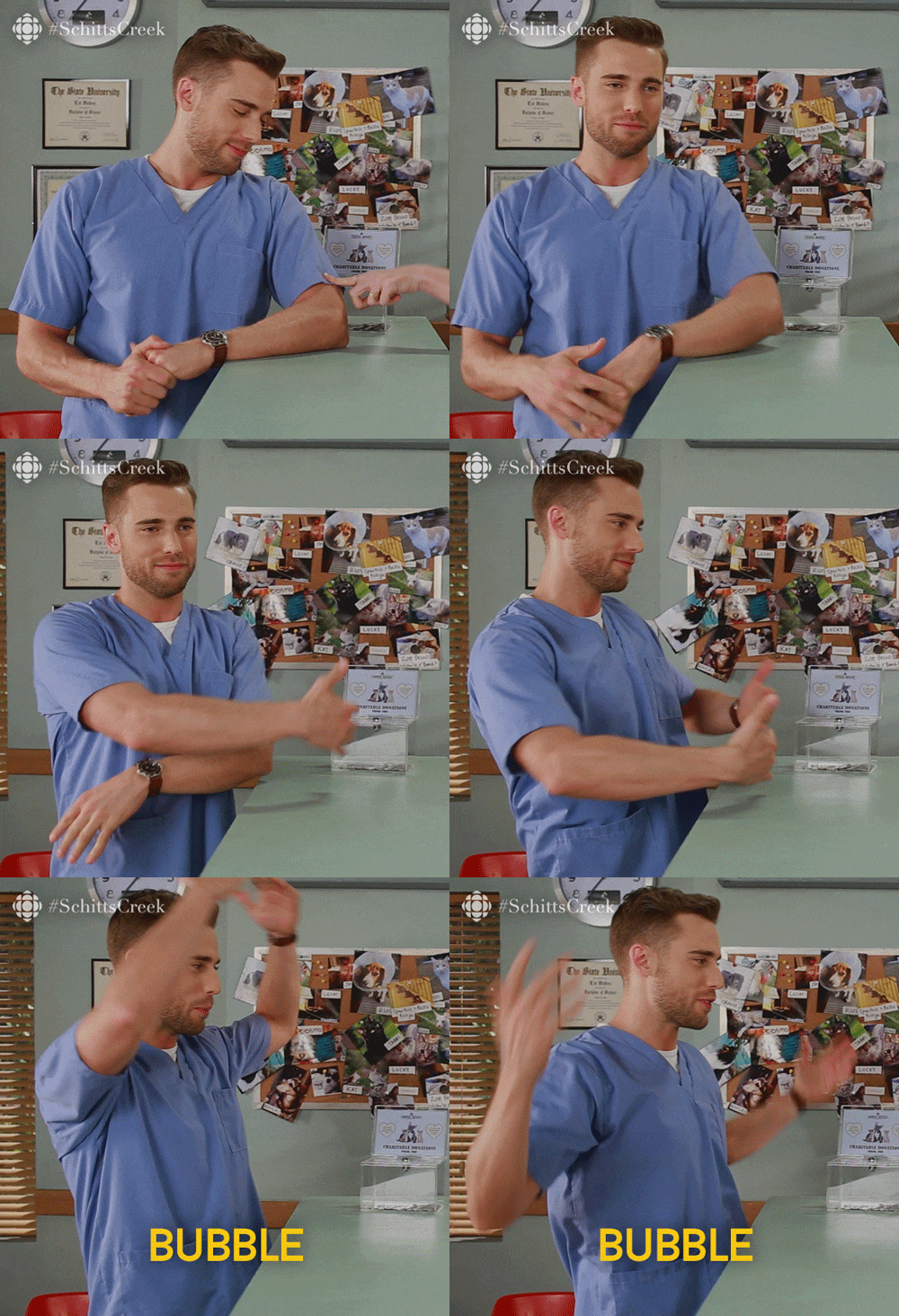
     Personal space is definitely a foreign concept to Germans which I never would've expected! For a non-smiling, rule-following, reserved society, you'd expect them to be all about personal bubbles. Nope! My first experience with this was at the grocery store. I had just grabbed a box of something off of the shelf to read the ingredients when somebody passing through chose to squeeze in between me and the shelf instead of going around me. I was so baffled! The rest of the aisle was empty, and as you're probably imagining, I was close to the shelf since I was grabbing stuff right? Well apparently it's enough space for somebody to walk through...

     Imagine yourself standing in line. You usually stand a step back so that you're not breathing down somebody's neck right? Well apparently that small step back is grounds for squeezing in! That little gap of space, the bubble that should always exist between you and another person, is just enough for a German to squeeze in and cut in front of you, as if you weren’t even standing there. So watch out! They're not afraid to rub right up against you...


4. Honesty

     Germans see bluntness as a positive thing. Americans tend to soften their words to avoid offending someone, but Germans think it's more helpful to say the brutal truth than to dance around it. For example, my husband's workplace takes turns baking some form of dessert for birthdays. One colleague made a pudding dessert that didn't turn out too well, and somebody told him that it was terrible and that he shouldn't make it ever again - in front of everybody. You don't really hear that kind of bluntness in the US. 😂 We've also heard some pretty funny flirting/dating stories. For example, if they don't like a gift you got them, they will let you know. Also, if you plan on dating, you won't have to wonder what went wrong in the relationship. Apparently they will let you know what they didn't like about you! (Which I actually think is good point - I appreciate closure).


5. Helping others

     This one's still something that irks us! Germans will NOT help you when they see you struggling unless you explicitly ask for it. They will watch an old lady fall on the bus, and nobody will help her until she asks for help (no joke, we've witnessed this multiple times). One time my husband was struggling to reach the 'stop' button on the tram because it was crowded, and the guy standing right in the front of the button was staring at his struggling hand without a single motion to help press it.
     Our German just isn't good enough to ask for help sometimes so we get frustrated at the lack of what we believe to be common decency. If you see somebody fall, shouldn't you try to help them up or at least ask if they need help? If you see somebody carrying heavy/large boxes trying to open the door, shouldn't you automatically help them open the door? No, they will just stare at you struggle. Some will even get frustrated that you're taking so long...


6. Noisiness

     If you somehow haven't figured it out yet, Americans are loud. We're so much louder than the Germans. You can always pick out the foreigners at a restaurant or bar because they talk so much louder than the Germans do. After several beers, the Germans do catch up, but it's obvious at first. 😂 My father-in-law has definitely received a few dirty looks for talking so loudly in a cafe.
     The Germans appreciate the quiet, and they're very strict about quiet hours. If you're running loud machinery late at night (no more late laundry nights) or on Sundays, you can get fined for disrupting your neighbors. And yes, you read that right - on Sundays! Sundays are days of rest, and excessive noise is not allowed. This means no lawn mowing, hammering nails into the wall/renovating, etc. Even your bbq/grilling time outside is regulated. And if you have young children, some grouchy neighbors may complain that they're playing too loud! Oh boy...


7. Staring

     Man do I hate this one. Apparently Germans aren't taught that staring is rude. Staring is one of my pet peeves so imagine my struggle as an Asian in an old East German town. We live in a neighborhood with what seems mostly elderly so I was constantly stared at when I first arrived. Children are also a problem with their unashamed, big eyes staring up at me. It's completely written on their foreheads, ' Mummy, that lady looks different from us!' 😂 The staring has definitely not helped with assimilating here unfortunately. The worst is when you stare back, and they still don't look away! Quite possibly the most awkward encounters in my life...


8. Following the rules

     Germans are not kidding when they say they enjoy order and rules! Of course this is a generalization and doesn't apply to every single German, but overall, they're pretty "by the book." It will be late at night with no cars in sight, but my neighbors will refuse to cross the street because of the little red man in the light. Don't even think about doing this during the day with children around! They will yell at you for setting a bad example! 😂 We were going to miss our tram one day so we were sprinting across the street, but I felt so guilty listening to people gasp, "In front of the children?!"
     When we first arrived, we were also intrigued by the trust system of public transportation here. You normally have to scan a ticket/metro card to enter the bus/tram back home, but they just trust you to have bought the proper tickets here. We have learned after living here that they do random checks every once in a while, but it's still an overall trustful system. Perhaps it's because the German system relies on contributing to the common good that freeloaders & rule-breakers seem to be heavily discouraged/scorned in German culture?


Anyways! This turned out to be so much longer than I thought it'd be! 😂

Hope you've enjoyed my American perspective on German society. Maybe it'll even help some of you newer expats out there. Get ready for an amazing time here in Germany! 🍻


Yay! You should now have all of your residence paperwork set up (if you've been following my steps so far: obtaining a residence, registering your address with the city, & setting up your appointment for your residence permit). Your next priority is probably setting up your apartment. Here's some information that will help you organize everything you'll need.

Furniture

     I would prioritize furniture first, especially if you're on a tight budget, because IKEA (likely your cheapest option) is usually 2 weeks out for delivery. Maybe if you go to the nicer (far more expensive) furniture stores, they would have faster delivery? We also looked at other companies that can deliver your IKEA purchases, but IKEA's service actually had a shorter wait time which meant we would have a bed sooner. This was important because my ridiculous husband couldn't find an air mattress for the first week so we had been sleeping on the floor (Don't worry, I discovered not long after that Rossman had one all along... Note: don't depend on husbands to find things 😤). We had looked at several other furniture stores in our area & any big brand stores' websites, and I can honestly say IKEA was by far the cheapest. Especially if you'll be needing to install a kitchen.
     I've mentioned before that renting apartments usually mean you'll get an empty shell with a toilet and bath. Literally. They won't even come with lightbulbs, let alone light fixtures. You can specifically look for apartments that are furnished with a full kitchen, but they're usually higher in rent or hard to find. In Jena, the difference seemed enough that we'd make up for having to buy a kitchen in 3 months so it wasn't worth it to pay more in rent. If you're worried about the kitchen, here's what we used to build a very basic and cheap one. Hopefully it can help you get a ballpark amount.

Cabinet Shell to hold your sink/stove/oven: KNOXHULT €117
Cheapest stove that had more than one hot spot: LAGAN HGC3K €100
Cheapest oven (I would advise against this oven, it is so weak): LAGAN OV3 €100
I don't remember which sink we purchased but I believe it was around €100
Fridge: LAGAN Kuhl €200
Washing Machine from Saturn.de on sale (8kg Comfee) €270
A couple of shelves from IKEA: depends on how many you want and what kind
Total = around €1000 for a kitchen

     As usual with IKEA items, you will need to build and install everything on your own. Thankfully my husband is a bit handy and only needed to buy a €30 Jigsaw and basic tools to build the kitchen, but if that's not something you're up for, you can always hire IKEA (or whatever company you purchase from) to do so. It can be expensive though so keep this price in mind as well. We were very conscious about the price since we're only planning on staying for a few years.

*Bonus - OBI (Germany's Home Depot-same orange and everything lol) now rents power tools at an hourly rate which they didn't before (thanks OBI...) If you don't need anything fancy, IKEA also sells basic power tools at their locations for very cheap.

A kitchen before we installed our washing machine and some wall shelves
Everything from IKEA as listed


Electricity/Water

     Now you're probably wondering why we weren't freaking out about our water and electricity first. The system seems to be different here as they don't separate utilities by household. Which means the utilities don't get "cut" when you move out, and electricity/water is already available when you move in. BUT you'll still have to set up a contract with a provider. For us, water was "included" in our rent (up to a certain amount/year). And we had to find an electric company to contract. Your landlord should have a company to recommend or a company they have a partnership with to provide you with a discount.
     All you have to do is take your “Anmeldungbescheinigung” (Address Registration Certificate from the Burger Services), bank information (most payments in Germany are set up through automatic withdrawals), and your rental contract which shows your starting electricity meter numbers. The company will also ask how long you want the contract for and the amount per year. You can do month by month, yearly, etc, but it's cheaper to go for longer contracts. We knew we'd be staying for at least 2 years which is what we decided on. As for the amount, they can show you average usage numbers, and it's not a big deal if you go over a little. They will refund you the amount for any unused electricity.
     We were told the system is this way due to one company controlling all of the city's electricity. The companies you contract then request usage from this "mega company" and take charge of your meter usage. Strange, but it's also how the internet works here. Which we'll talk about next~


Internet/Cell Service

     As I was saying, the system for your household internet is similar to getting electricity. There's a "mega company" which, in this case, is Telekom (aka T-Mobile!). Telekom apparently used to have a monopoly on internet/phone services in Germany so they own all of the wiring/system. Now different companies have to request usage of this system to provide you with their own contract/pricing.
     You can choose to sign up with Telekom (fastest set up) or go with other options. Friends have told me that O2 is the cheapest, but customer service is pretty horrible if you ever run into problems. We ended up going with Vodafone because they provide free EU roaming. As avid travelers, we lit up at the offer. I would say pricing is about the same as AT&T back home which is fine, but the slow set up time can really suck. Your cell service is instant, but it'll take around 3 weeks after you sign up with Vodafone for them to gain access to Telekom's internet services and have a service man sent out to your home. They'll try and make up for it by providing you an extra 10GB of data on your cells, but 10GB can go quick if you want to Netflix/Hulu. We just ended up sitting around cafes for the first few weekends...


TV/Radio Tax

     Now this one's a funny one. Every household in Germany is required to pay a TV/Radio Tax (Rundfunkbeitrag). This tax funds the production and broadcasting of Germany's public channels. Because nowadays every household is likely to have a tv/radio or internet (which can access these channels), it is required to pay unless you are blind/deaf. It'll run you €17.50/month, and thankfully, it's per household, not person. You should automatically receive this letter after registering your address with the city, but if you don't, you will have to contact the Beitrag office to make sure & pay. If you don't, you'll have to pay everything you missed along with some hefty late fees. If you refuse to pay, they will take legal actions so it's best to just comply.


Garden Plots

     This one doesn't really have to do with your apartment, but if you love gardening, Germany is quite the place to be. 'Garden plots' (Schrebergärten) are popular to 'purchase' here if you're interested. You might have already noticed a 'Garden Colony' depending on where you live. They look like fields that are squared off with tiny homes on each square. You can "purchase" a plot from a previous owner, but you wouldn't actually own the land, just everything on the land. This is all determined by a government appraiser down to every little herb (predetermined by goverment standards). Do keep in mind that as much as you can enjoy your own garden, there are many rules to managing your garden plot. It's kind of like having an HOA that tells you what you can/can't grow, what kind of house you can build, and so on. Some garden plots actually have an HOA/Management club.


Hope this has been helpful! If you have any questions, never hesitate to ask~

@to.unknownthings


*This is simply what I learned from my personal experiences/research. Please always make sure to consult with the proper authorities and take this post with a grain of salt.
     This has been a fairly requested topic: Transit in Germany! Transit here, even in our smaller city, is as great as we were expecting it to be. Buses & trams within the city are usually timely, and the routes are pretty expansive.

Our local bus/tram routes

    The buses are actually quite nice, and they make it really convenient to buy tickets. Every bus has a ticket machine where you can buy a ticket that is valid for the next hour. Or you can buy tickets at the machines present at "major" stops. These tickets don't expire so you can buy multiple tickets, but you have to 'validate' them when you board the bus in the 'orange stamp boxes' (usually located near the doors). You stick the ticket in, and it stamps a time/date stamp. If this kind of ticket doesn't have one of these time stamps, the ticket is invalid and you could get fined when 'officials' come around to check tickets.


     From our personal experience, they do check for tickets fairly often in our city. You will never be able to tell who the 'officials' are because they don't wear uniforms. They'll be riding the bus like normal passengers, wait for the bus to fill up a bit, and then as the bus is moving, start checking everybody's tickets. Our penalty for not having a valid ticket is €60, but I'm sure that depends on your city. €60 is the price of our monthly bus pass so if you're a forgetful person, I'd say just buy the monthly pass to make things easier.

     As for the trains, pricing depends on the distance you're traveling along with how in advance you plan your trips. You can buy tickets online (Deutsche Bahn) in advance or at the stations, and some smaller regional trains also have ticket machines on board. BUT last minute train tickets can be quite expensive so try to plan in advance. There are other cheaper options (such as FlixBus, 'Europe's Megabus'), but the trains are far spacier and faster. Some of the newer trains even have 'family hubs' for group seating (shown below). And if you're traveling with other people, there are also some decent group rates you can find in every city.


     Is transit pet friendly in Germany? Yes it is! Dogs are allowed on on both the buses/trams and the trains. You just have to buy tickets for your dogs. They're €1.60 on our city buses and the ticket is valid for 6 hours. As for the trains, it'll depend on the size of your pet and where you're going. I've included the info for pets on the Deutsche Bahn in the photo below.


     Is transit handicap friendly in Germany? Yes it is! Every bus/train here seems to have a large area for any possible handicap space needed. They're strict about having certain spots for the handicapped/elderly. If you're sitting in these spots when they're needed, the bus driver WILL tell you to get up so don't be a jerk!

     While we're talking about these spaces on transit, because these large areas are present, transit is also very bike and stroller friendly. The regional trains especially seem to be so. Just look for the open space on trains that are marked for bikes/strollers. There are also usually shelves you can put your large luggage on and overhead shelves at your seat that can fit a carry-on size just fine. Very travel friendly!


Hope this has been helpful! If you have any questions, never hesitate to ask~

@to.unknownthings


*This is simply what I learned from my personal experiences/research. Please always make sure to consult with the proper authorities such as your transit authorities and take this post with a grain of salt.
     Here's a quick blip about our 1 day itinerary in Weimar. I won't go into much details about the historical facts of each place since that's the fun of visiting them, but we can walk through the town together. We left out the Buchenwald Memorial for another day along with some of the gardens since we went in February when everything was still cold & grey 😅 But I'll make sure to blog again on our next trip there so you can plan a second day!

What we saw in a day:

Goethe Schiller Monument  (5 min)
Bach Monument  (1 min)
Herzogin Anna Amalia Bibliothek  (1-2 hr)
Schlossmuseum  (2 hr)
Church of St. Peter and St. Paul  (30 min)
Goethe House @ Goethe Nationalmuseum  (1-2 hr)
Weimarer Fürstengruft/Russian Orthodox Chapel @ Historic Cemetery  (1 hr)


     First thing - if you ride the train into town, be aware that the station is about a 15 min walk from the main part of the city (shown below). It's a straight shot so you don't have to worry about getting lost. The walk isn't really scenic, but there were a few cool buildings along the way.
    I'd say Saturdays are far busier than Sundays even though most of the tourist spots here are open both days. You just won't find any stores open on Sundays, other than the restaurants/cafes (as is the norm in Germany). So plan accordingly, Instagrammers 😋


Let's review: so far, I've talked about getting to Germany and the first thing you need to do when you arrive (looking for a residence). Well, it gets worse! I only scratched the surface when I talked about apartment hunting to start off simply. But it's so much more complicated than just the circled web of *Apartment VS Bank VS the Bürgerservice*

Welcome to Part 2: the tangled web gets more tangled!


(Hope you enjoyed the Comic Sans 😂)

In Part 1, we talked about the strange circle of obtaining an apartment which is directly linked to obtaining a bank account with a registered address (Anmeldung). Here, we'll talk about a couple of other things you will need for the apartment process, such as the different types of insurance.


1. Insurance

At least two types of insurance will probably be required when obtaining your apartment (depending on the rental agency). We were required to obtain Renter's Insurance (Hausratversicherung) and "Personal Liability Insurance" (Haftpflichtversicherung). You should be familiar with Renter's Insurance as that's also commonly required in the US, but you may be asking, what is "Personal Liability Insurance?"
Personal Liability Insurance will insure you in case of any damage you may cause. For example: if you accidentally damage your neighbor's belonging, the replacement would be covered; if you accidentally cause an accident and hurt somebody, their hospital bill would be covered. Every German seems to have this insurance, and it's very affordable so why not? You can also obtain more insurance such as "Law Protection Insurance" (Rechtsschutzversicherung) which will cover any legal fees in case of court disputes. The Germans seem to love insuring everything possible, down to their windows. You can read all about these crazy insurances in this article I found if you're curious.
Where can you start looking for these insurances? I started shopping for prices on this website. It is in German, but just look on the left for "Hausratversicherung" and "Haftpflichtversicherung" and then use Google Translate for the search fields (Google Chrome will be your best friend in Germany with their built in translation tool).  They also seem to show a rating for each company/policy, but I don't know what that's based on.
After I narrowed down a couple of companies that sounded reliable and affordable, I simply sent out emails asking if any of them spoke English and if they could help us obtain these insurances. We went with the first company to respond, Konzept und Marketing Gruppe. Our Representative, Robert Strüber, wasn't too confident with his English so we just communicated via email, but he was to the point and very responsive so we were happy (if you want, this was our contact: R.strueber@versifair.de). It was all around a pretty quick and easy process- we were able to obtain all necessary insurances with him (including insurance for our pets!). You may just want to work on timing because he will be needing an address. We had contacted him when we were still waiting on the rental agency's decision which was totally ok, he just asked that we let him know as soon as we obtained the address so he could file and send the paperwork.


2. Paperwork for your Apartment Application

A couple of other things your rental agency may require during your application process are:
German Work Contract from your employer showing your income
Letter from your previous landlord stating you were a good renter (paid on time, no problems)
Or if you owned, a copy of your deed or other proof


3. Anmeldung

Registering your residence with your city's Bürgerservice (or Bürgeramt) will get you the “Anmeldungbescheinigung” (Registration Certificate). You will be needing this piece of paper for most accounts you will be opening during your stay (bank account, electricity, internet, etc). As mentioned in Part 1, you should make an appointment ahead of time as sometimes the queue is long. I've read some larger cities don't require an appointment, but that was not the case in Jena. Our small town required you to make an appointment as well as keep all of your paperwork within the city (some forums mentioned doing your immigration paperwork in a city nearby for shorter queues - false). I believe you're required to register your address within 14 days of moving into your new residence. Thus, we made our appointment as soon as we started actually looking at apartments as our city's queue was more than a week out, but I wouldn't stress too much about the deadline. They seem to be understanding about going over these limits if it's due to their long appointment queues since it's not your fault.
Also, as mentioned in Part 1, if you're having real difficulties finding a place but you need things to get going for work/the bank, we've been told you can just register your workplace/hotel address and have your employer/hotel write a letter stating that you're staying there. But this should be a last measure because 1) we're not sure if it would make the process more difficult and 2) after you do find a place, you have to make an appointment and re-register everything again. Yes, you will have to re-register if you want your electricity and internet to go to the right address as they will check your "Registration Certificate."
The process was fairly simple, you make an appointment, show up/check in, they'll call you to head towards a numbered booth, you show them your paperwork, they scan/copy everything in, and then provide you with the "Registration Certificate." They should also let you know when you should be expecting your "Tax ID" (Steuer-ID). You will be needing this to start working so make sure to ask about it if they don't mention it first.
We were required to bring:
Passports, Rental Contract, Meldebestatigung (document from your Landlord proving your residence - yes, they will want both), any documents proving your relation to your family (if you have anybody coming with you - such as marriage certificates, birth certificates, etc and their Passports), and of course, a filled out Anmeldung Form. You should be able to find it on your local Bürgeramt's website. I did not want to provide it here in case your city's form looks different.

To Note:

1) They did hassle us a little about our Marriage Certificate being in English. Thankfully, our official was confident in her English along with her supervisor so they decided to ok it. Be aware that this may be a problem, especially for more complex forms such as your child's Birth Certificate. You may want to ask your local Bürgeramt ahead of time if you will be needing translated forms.
2) Our official asked if we had enrolled in Health Insurance yet and asked to look at our Insurance Cards. We knew it was required later on, but we weren't aware that they'd ask for it during our Anmeldung appointment. I'm not sure if they normally require it or they usually just inform you that you will be needing it for your "Permanent Residence Appointment" later on, but I hadn't seen anywhere that we were required to bring it for this appointment. We just happened to have it on us- luckily, my husband's employer had referred us to a health insurance company with a good English program so that was a quick process.
3) The Bürgeramt will be asking about your religious status. If you so choose to identify with certain religions and attend church in Germany, you will have to pay a "Church Tax" (Kirchensteuer). This tax isn't small, it's a percentage of your salary and I believe the percentage depends on your religion. This tax is collected by the Tax Office (then channeled to your faith) which is why they ask you during this appointment.


4. Now you're ready for the Bank and other accounts

Whoohoo!!! As mentioned in Part 1, you will most likely be needing an appointment to open your bank account. Otherwise, it seemed just like opening a bank account in the States except that they require your work contract/proof of income. They will also be requiring your "Registration Certificate" (Anmeldungbescheinigung), your Rental Contract won't suffice. Be aware you will be providing your SSN (if from the US) and filling out forms for tax history/divulging any German accounts to the US.
Extra tip: ask them about activating "PayDirekt" while you're there. If it's not activated and you don't know how to use it, you may have trouble purchasing items online. We didn't even know about this until we tried to purchase a washing machine from Saturn.de.


5. Don't Forget: Permanent Residency

Don't forget you still have to get your "Permanent Resident Card" (Aufenthaltstitel) after you register your address. You will have to make an appointment for this (depending on what city you're in) at your local "Ausländerbehörde." Your travel visa is only valid for 90 days in Germany so you want to time this right and make your appointment ahead of time, but as mentioned earlier, they seem to be understanding about going over these limits if it's due to their long appointment queues. I believe if the next available appointment is past your 90 day mark, they'll have to provide you a visa extension.
This appointment was very similar to the Anmeldung appointment except that they required more documents along with your biometrics. You can find a list of everything you will be required to bring on your local Ausländerbehörde's website along with the form you will need to complete.
You will also be needing "passport photos" which you can easily obtain here with one of those "passport photo kiosks." It basically looks just like one of those fun photo booths, but they're designed to provide specific instructions for passport requirements along with the proper sized photos. We've found them at several local grocery stores so they seem to be easily accessible!
The whole appointment took about 1.5 hours if I remember right. A lot of it was just copying/scanning/signing and then printing out a temporary residence card for us.
We received our 'Permanent Residence' through my husband's "critical skill," being a Chemist. Apparently being a doctorate means neither he nor I were required to know German to obtain residence in Germany, but that's not the norm. I believe you may be required to take "Assimilation and Language" classes and pass certain level tests for them to grant you full permanent residence.
When I asked if I had permission to work as well (as the spouse), she said yes and implied that the spouse was normally allowed to work during the time frame of the primary spouse's work contract. She stated that if I found employment with a longer work contract than my husband's, then we could come in before the expiration of our 'Permanent Residence' status to renew the card for my new work contract dates.


And that should conclude any paperwork for your stay here in Germany! Unless you have special circumstances, you don't file your taxes here so that about sums it up. Hope this has been helpful! Please feel free to ask me any questions anytime. If there's ever anything you would like me to add or write about, I always welcome comments~


*This is simply what I learned from my personal experiences/research. Please always make sure to consult with the proper authorities such as your local offices and banks and take this post with a grain of salt.
Newer Posts Older Posts Home

HI! I'M CHERRY

I'm a Korean-American who moved to Germany without ever having been abroad before! I started this blog then (read more here), but I'm now back in the US. Now based in Wilmington, NC living a sunny beach life. Please feel free to reach out anytime with any questions!

FOLLOW US

Stay Updated!

Categories

  • Moving to Germany 14
  • Travel 8
  • Expat Discoveries 5
  • Life in Germany 5
  • Paperwork 5
  • Shopping 5
  • Culture 4
  • Moving with your dogs 3
  • Travel in Germany 3
  • Freebies 1
  • Italy 1
  • Public Transit 1
Freebies
Travel

From Cherry To Kirsche

Thanks for Reading!

From-Cherryto-Kirsche-Header-SMALL-WHITE

Copyright © From Cherry to Kirsche. Designed by OddThemes